
Amazon Pay Wallet
From chaos to clarity—with a little global testing, a lot of negotiation, and one very passionate product team.
My role: Principal UX Designer
The Problem: Org Charts Galore
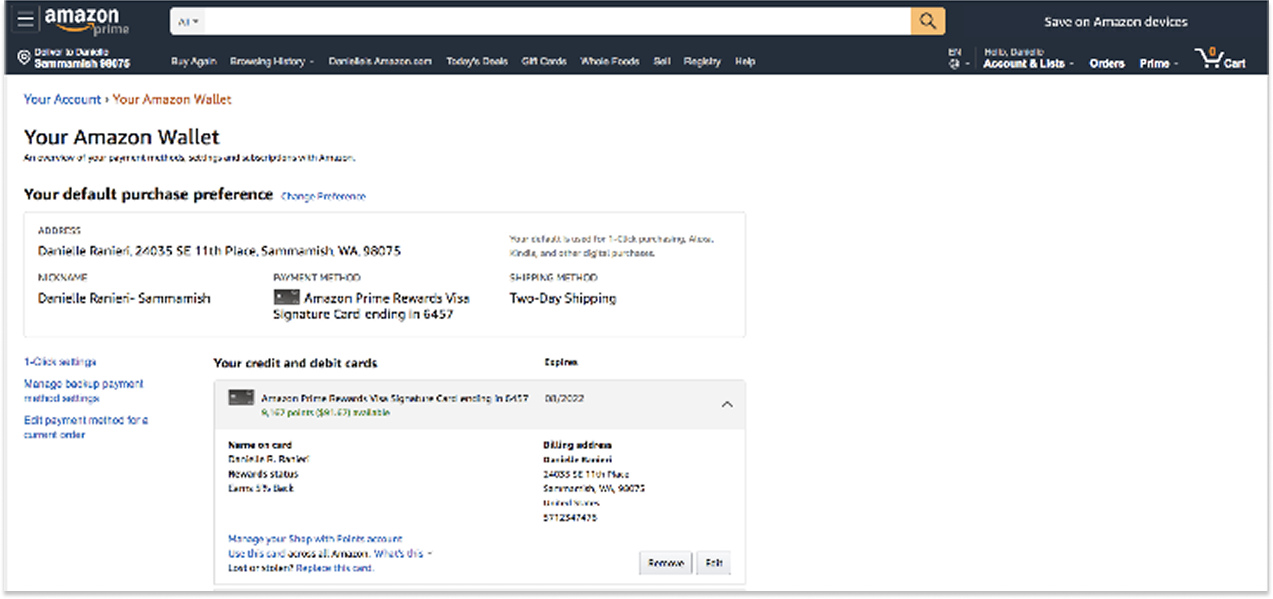
Customers had no idea where (or how) to manage their payment methods. Amazon’s payment experiences were fractured, confusing, and not-so-accessible. Even internal leadership struggled to understand the tangle of products and entry points—let alone our customers.
To make it worse, naming conventions were inconsistent, experiences didn’t scale globally or across different payment methods, and product pages were often designed by whichever team built the feature, not with the customer in mind. (Nothing like seeing the org chart in your UI.)
The Spark: Rebranding
Leadership knew something had to change. Max Bardon (VP of Payments) kicked off a full rebrand—an initiative to unify and brand Amazon’s payment experience. This brought together Amazon Pay, Amazon Payment Products (APP), and Payment Acceptance and Experience (PAE—my team) to define a strategy for the future of payments.
Then… thanks to politics, it lost steam. So we made our own momentum.
The Pivot: Rebranding becomes Your Payments
With the rebrand slowing down, we broke out a piece of it and gave it new life:
Your Payments (later known as Amazon Payments Wallet—APW). This was a
space completely owned by the consumer payments team and we could
safely experiment and scale from there.
My job was to:
Define what this thing actually was
Align dozens of teams
Develop a global, scalable architecture
Make it usable, accessible, and actually helpful
Do it all… without dedicated funding
P0: Building the Foundation
We had a big vision. But in 2020, we had no engineers. And no money. So we got scrappy.
Team: 1 Principal Designer, 1 Principal PM, 5 stolen engineers
First, we explored
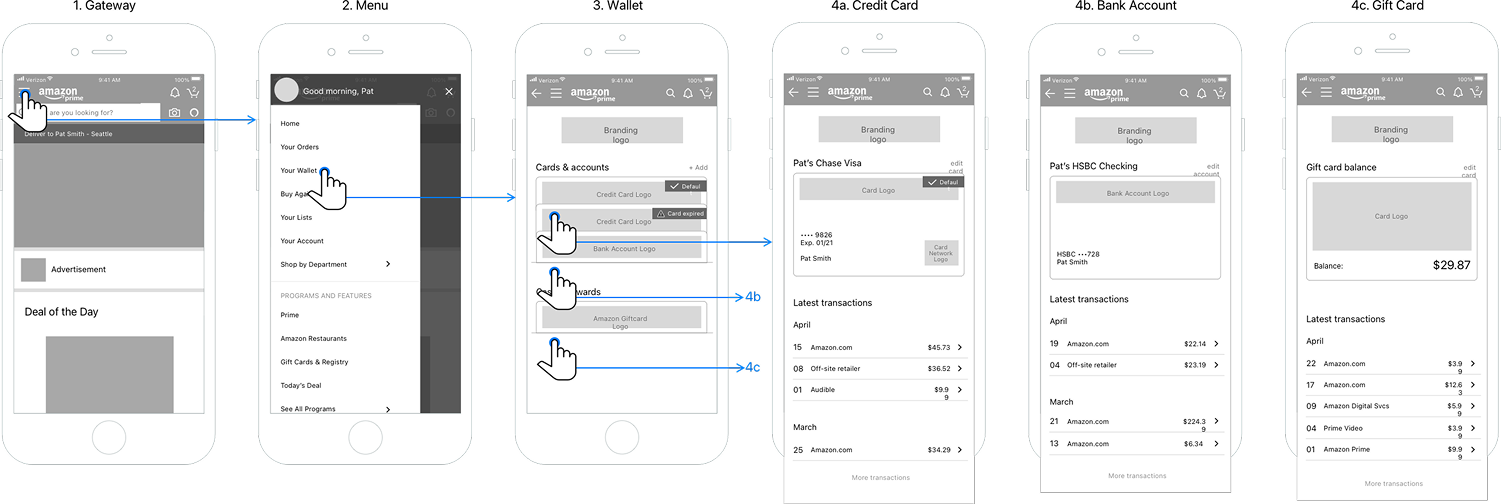
Before we could design a single pixel, we had to wrestle with the chaos. We dove headfirst into sketching, wireframing, and squinting at competitors’ digital wallets until our eyes crossed. We ran dozens of whiteboarding sessions, filling walls (and occasionally windows) with early flows and hypotheses. Sketch (yes, sketch) grew into a jungle of wires—hundreds of them—each one a breadcrumb on the trail to something useful. It was messy, scrappy, and wildly productive. And by the end, we had a clear direction, a stack of learnings, and just enough clarity to move into structured research without losing the creative spark.
Second, research
We started with Egypt—thinking it’d be a good test bed. Spoiler: it wasn’t. Our field research showed the country was still highly cash-based and not ready for a digital wallet.
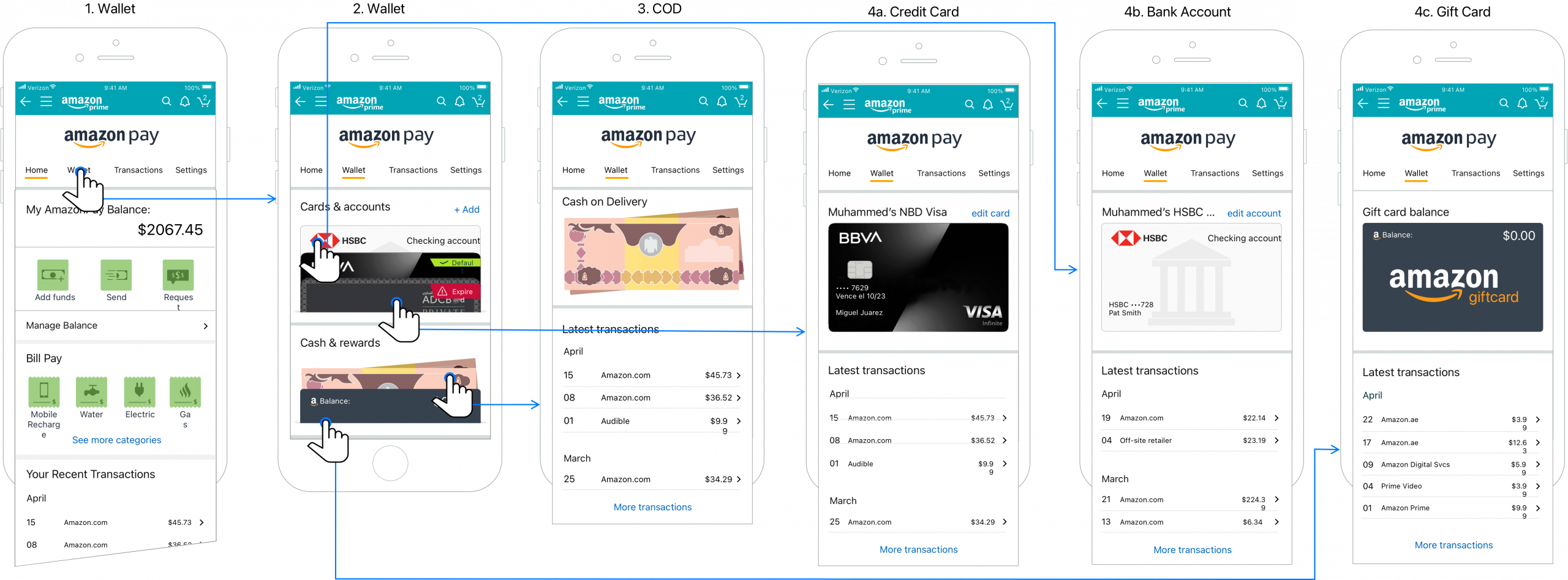
So we pivoted to UAE, and then Mexico, where we tested everything from a simplified, card-art-style wallet flow, adding a new card, mobile recharge (topping up cell phone minutes) and a branded checkout flow with “Amazon Pay”
Across both regions, users loved the modern, clean designs—and we saw 100% task completion. Even users who were skeptical of digital payments understood and trusted the flow.
We tested a wide range of ideas outside of the scope of the wallet to judge aspects of the experience that would be important for how we built the architecture.
Next, sneak in a foundation
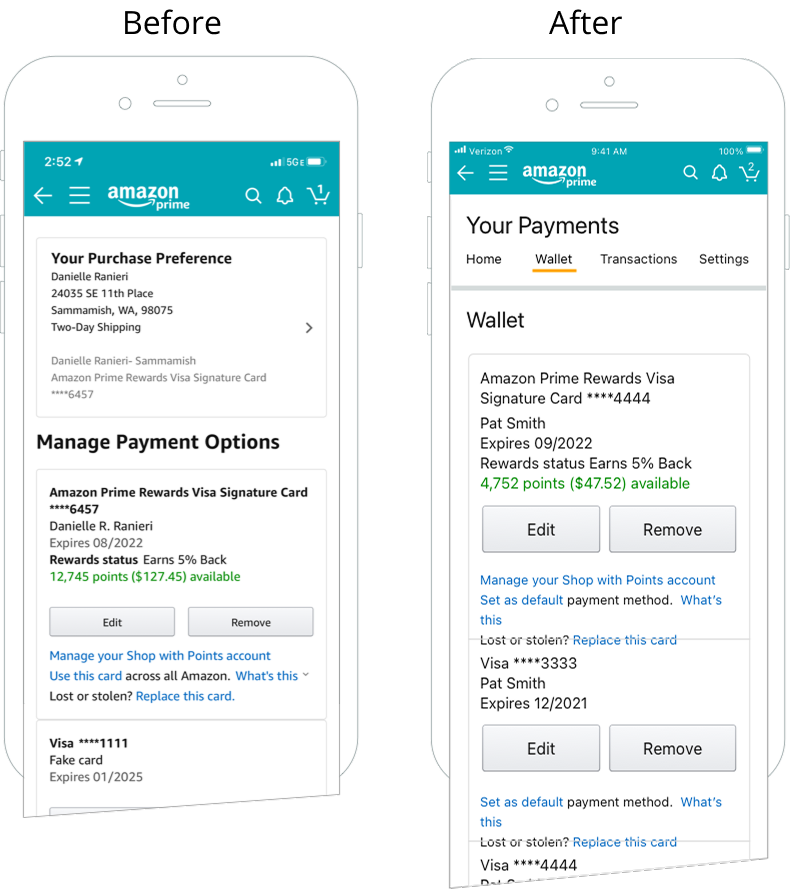
Around this time, another project—Your Transactions (YT)—had devs but no homepage. So I partnered with that PM to build out a shared architecture that supported both efforts. This “backdoor” approach gave us what we needed to start building APW, including:
- A hub-and-spoke architecture teams could plug into
- A real homepage for wallet functionality
- A visible place for upcoming features like bill pay, refunds, and more
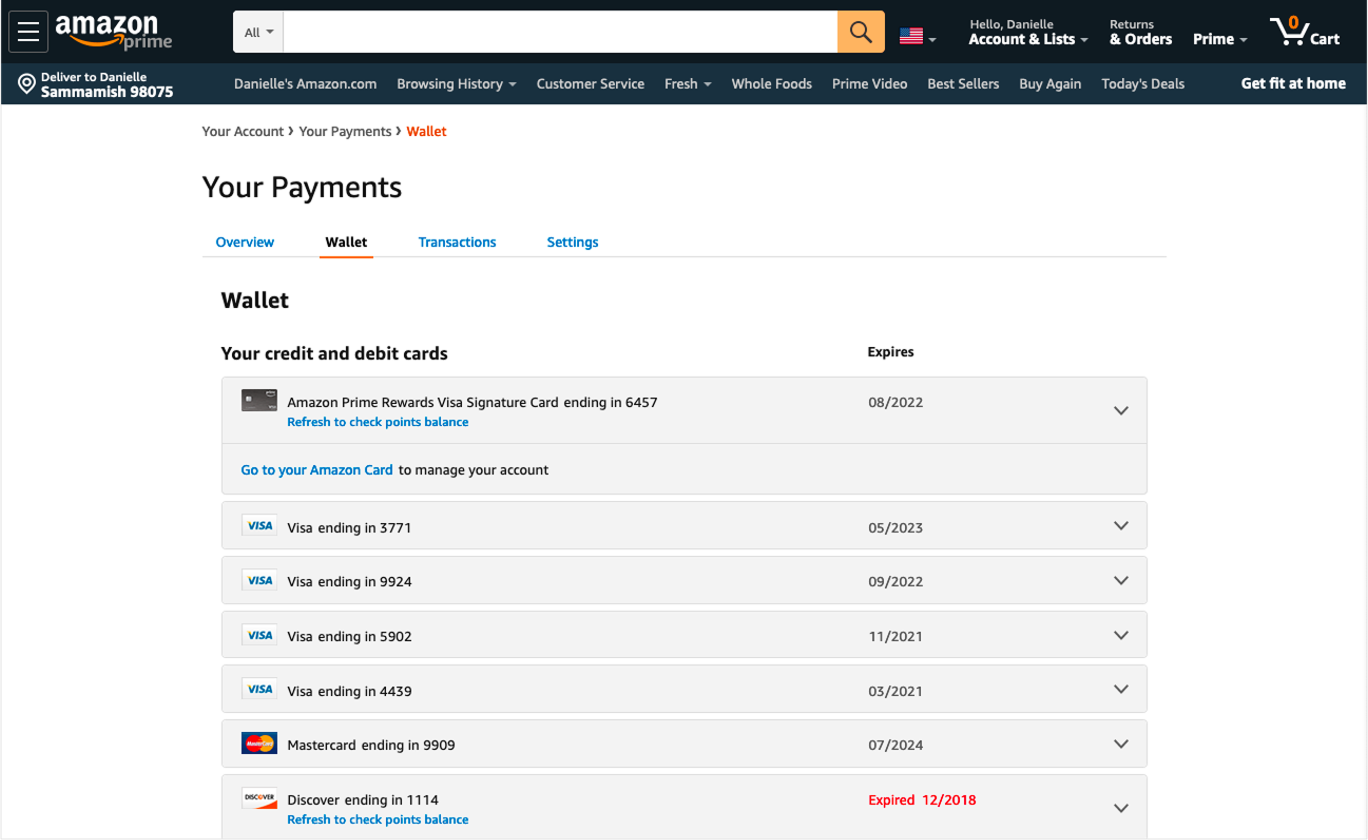
P0 Results
Despite being duct-taped together on borrowed resources, P0 launched globally (except CN and IN). And the results were wild:
💥 290MM+ clicks to “Amazon Wallet” in Q4
🌎 70MM+ unique customers globally, nearly half in the US
🇬🇧 UK traffic increased 50%
📉 Customer support contacts dropped dramatically:
“Unknown charge” → down 17%
“Payment issues” → down 38%
♿️ Major accessibility wins: improved screen reader flow and keyboard nav
P1: Brand, Build, Scale
After we proved our theory with a simple architecture change, leadership was all in on AWP. With funding secured in 2021, it was go-time. Now we had to execute over 35 payment methods and plan for several in-flight projects in health care, international banking, and payment products. We also had to consider how these patterns showed up in places like checkout and subscriptions.
Build it: and they will come
I led UX for APW’s next evolution—this time with proper engineering support and stakeholder buy-in. Our goals:
- Rebrand the experience to match the original Amazon Pay vision
- Build personalization, fix pain points, and modernize every pixel
- Create tools and architecture other teams could adopt
- Make it global, scalable, and invisible (in the best way)
This phase included:
- AUI card format: cleaner info, faster skimming
- Store mode: enabling APW in physical stores
- Guardrails + branding: so teams could build into the system without breaking it
- Biweekly collaboration with Amazon Pay and APP teams to align on roadmap and visuals
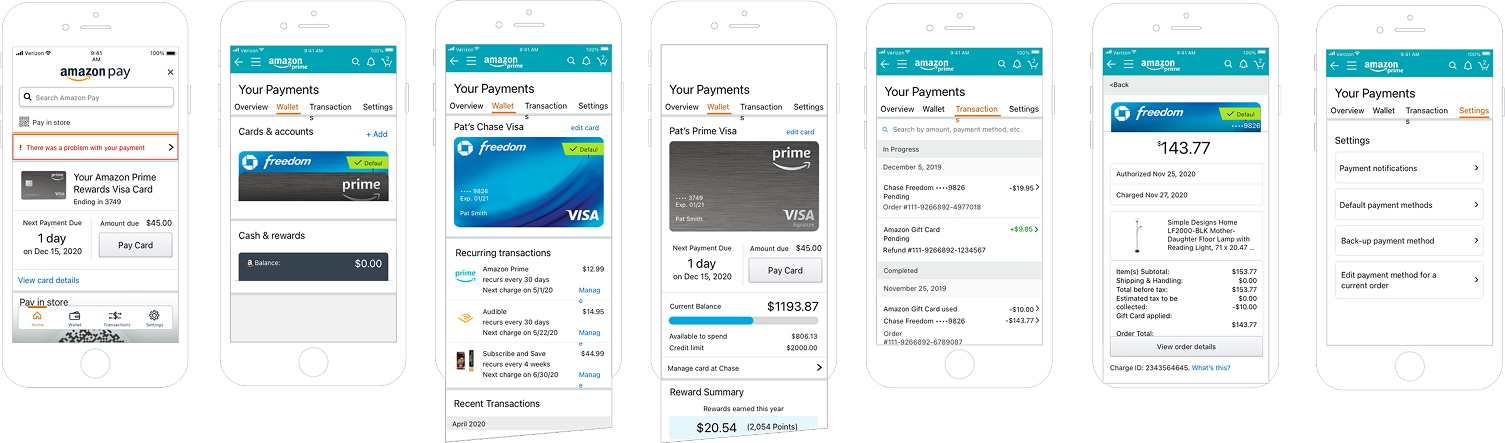
Scale: Thinking beyond the screens
We had to redesign 50+ payment methods, so we documented the architecture that governed the wallet and enlisted the help of another UX designer to take on the work while I continued on the vision work.
The architecture needed to be strict enough to keep the wallet cohesive, but flexible enough for upcoming use cases as well as use cases we hadn’t even predicted yet.
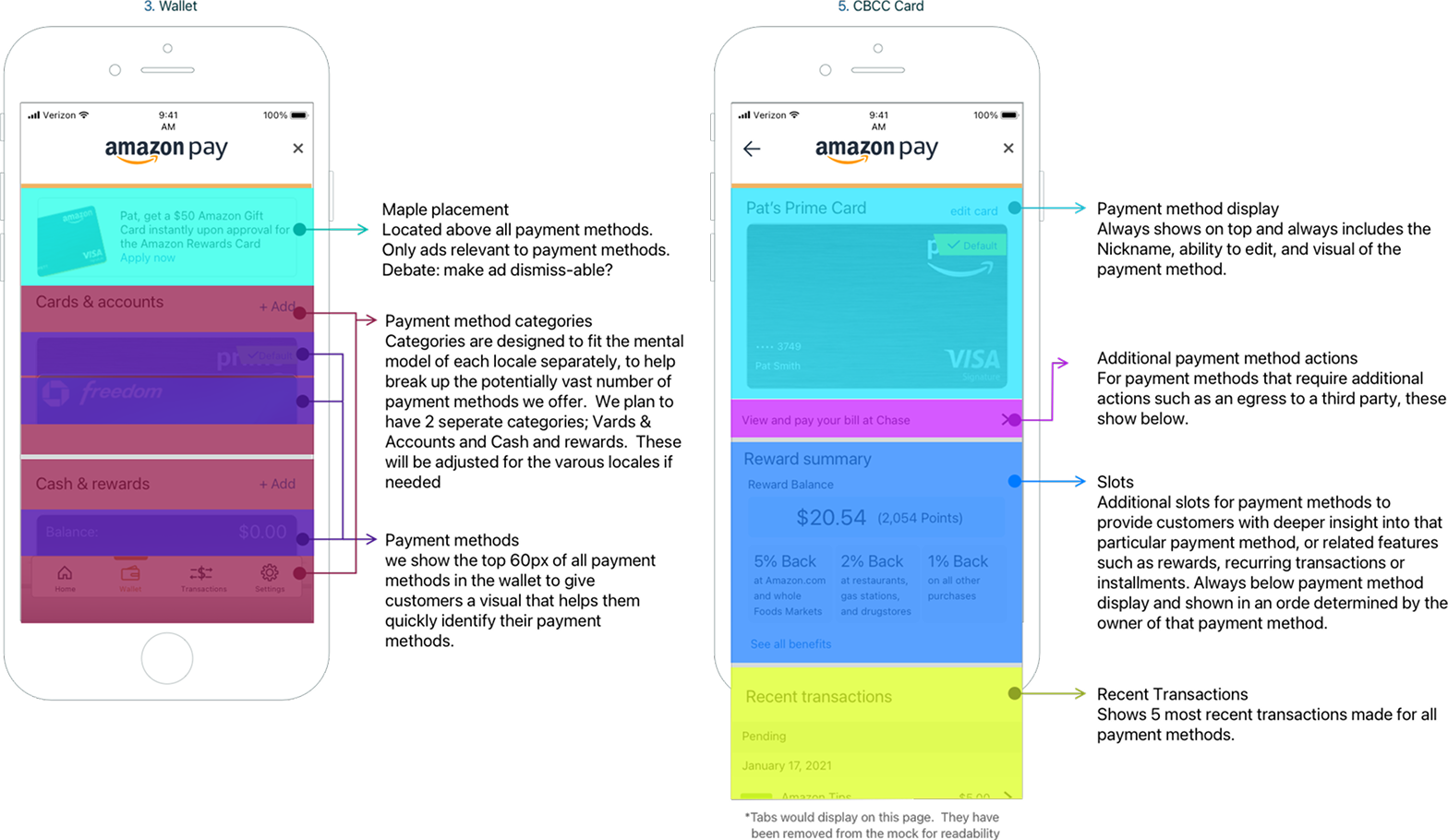
Visioning for Leadership
We caught the attention of David Williams, CEO of Amazon.com. He had heard about the work and metrics of the wallet and wanted to know where it was going next. This required dozens of meetings with SVP of Amazon international, Russ Ghirandeti while we refined the vision and gained business alignment. Here are some exceprts of the vision we showed to leadership.
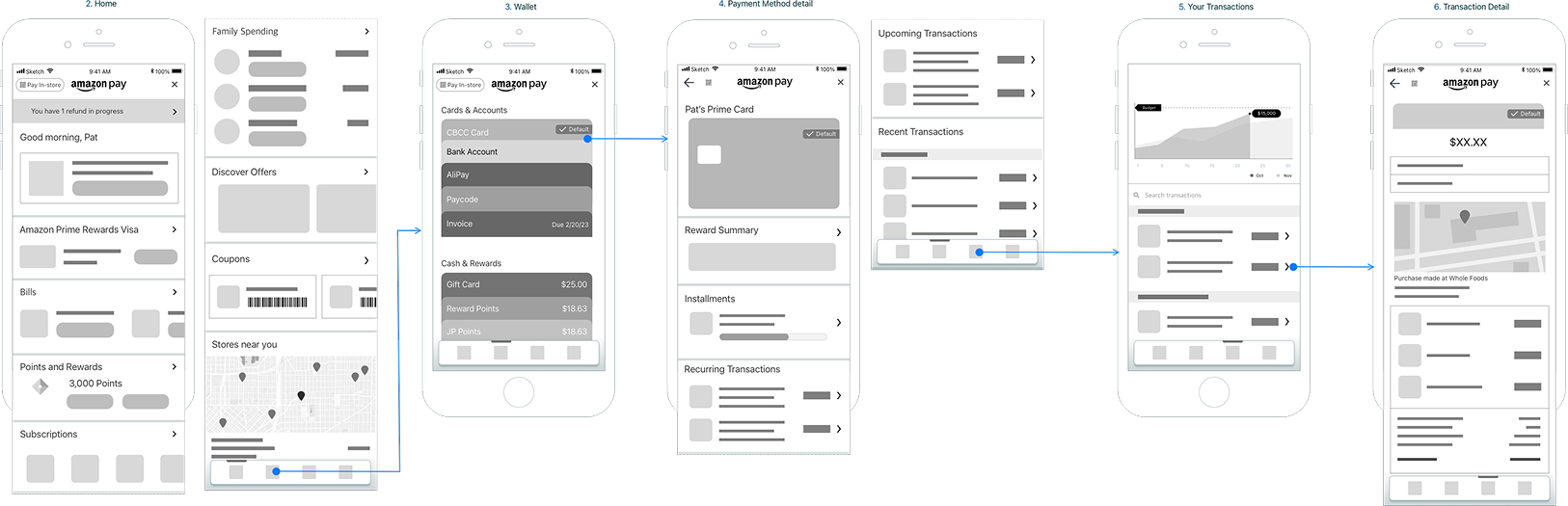
Storyboards I drew of the 2025 vision and how the wallet would blend into every day life.
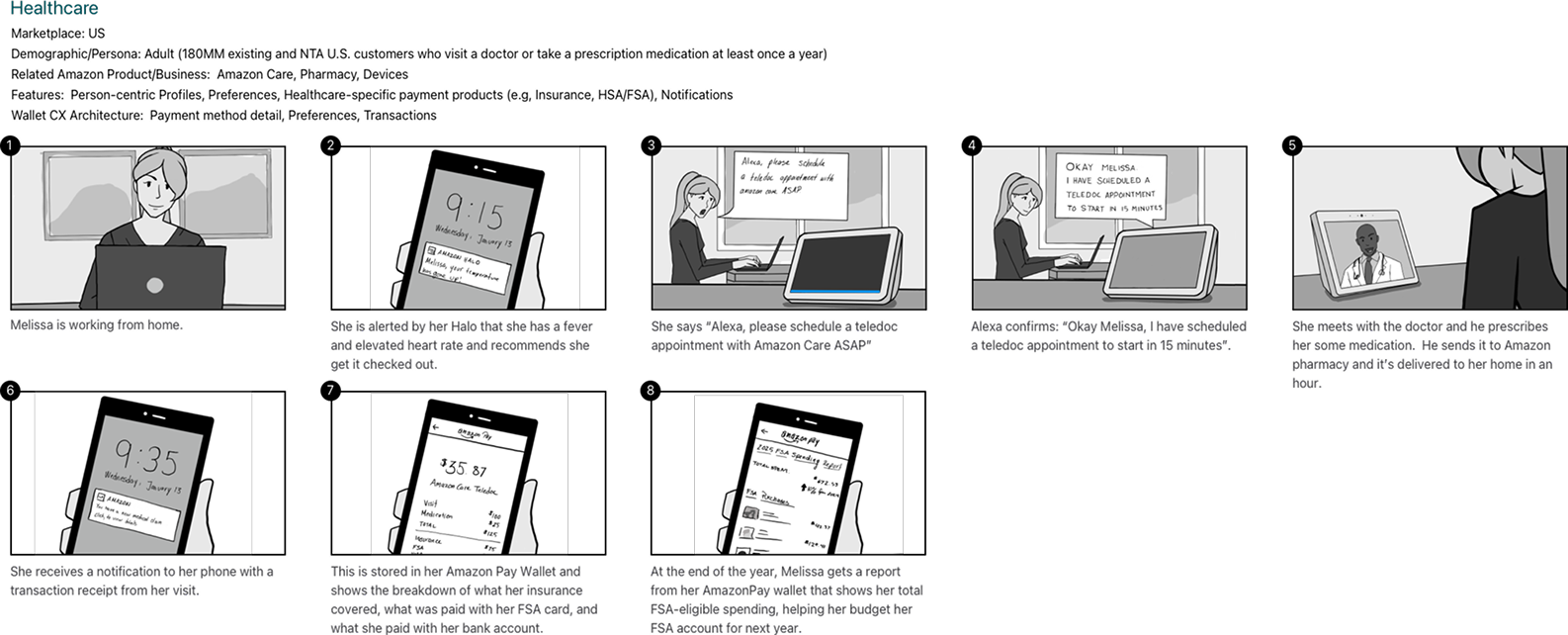
Unfortunately the rest of the work for the wallet and payments architecture has not been released yet and is still highly P&C, so this is where the story ends for now.
So with that, let’s move onto the results of P1…
P1 Launch Results
While we continued to work with leadership on the vision, P1 of the wallet went live globally.
Collaboration Wins
This wasn’t just a design challenge—it was a political one. I…
- Influenced product and tech teams across Amazon
- Defined architecture, vision, and long-term design strategy
- Created connection points for projects like Bill Pay, Refund Tracker, and Gift Cards
- Held global usability tests and synthesized local insights
- Showed how wallet experiences could actually help customers, not just shuffle them around
Reflection: Organizing Payments, Not by Org Chart
Designing the wallet wasn’t just about building one central place for payments. It was about:
- Cutting through ambiguity
- Connecting scattered products
- Thinking globally and locally
- Replacing confusion with clarity—without losing flexibility
It started as a branding exercise. It became a whole new architecture. And it changed how millions of people manage their payments on Amazon.
%
↑ adding payment methods
%
↓ add card abandonment rate
%
↑ Traffic to Wallet
%