
Anywhere UX
Next Agent Onboarding — More Silos than a Farm
My role: Vice President, User Experience and Principal Designer

The Challenge:
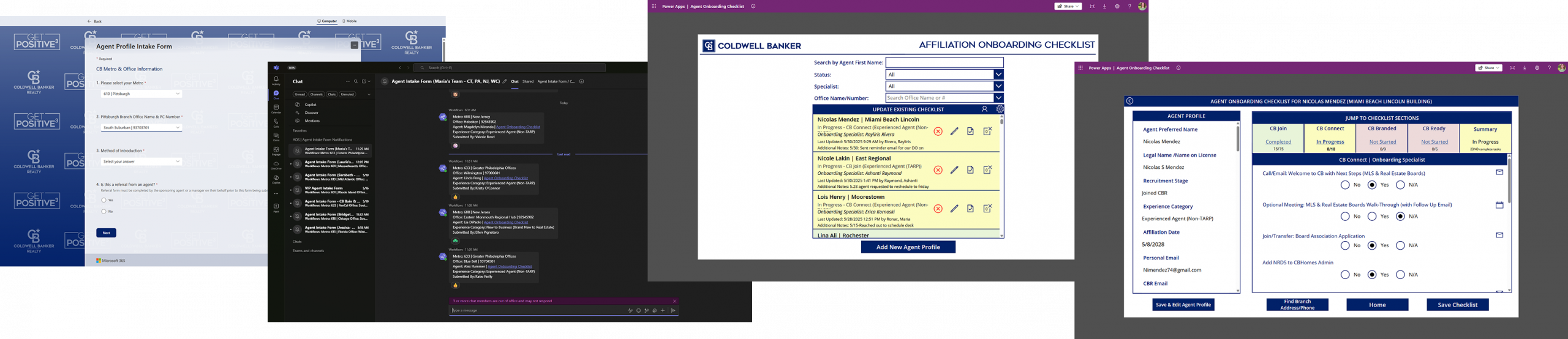
Agent onboarding sounds simple: a broker hires someone, they get set up in the system, and off they go. In reality? It was a tangle of SharePoint “sites” that took minutes to load, Teams chats with emojis as assignment signals, and manual workarounds stacked on manual workarounds. Agents and Onboarding specialists were caught in the middle of silos, and Denali (our “one agent app to rule them all”) hadn’t yet bridged the gap.
The work had started and stopped more than once on the agent side and then Anywhere Integrated Services (AIS) came knocking. They owned the backend operations that powered onboarding and wanted to move it into their application called Next. They needed help. We didn’t have a designer to assign, but the stakes were too high to let this one stall. So I stepped in, both as VP of UX providing leadership and as a hands-on Principal Designer, teaming with another design manager to carry the work forward.
What looked like “just a couple of screens” quickly unraveled into a much deeper problem:
- No one on the AIS side was connected to the agent or broker side.
- Legacy systems slowed down every step.
- Manual processes were fragile, clunky, and ripe for error.
If we didn’t solve this, new agents would continue to face a fractured experience at one of the most critical moments of their journey.
Mapping the Chaos
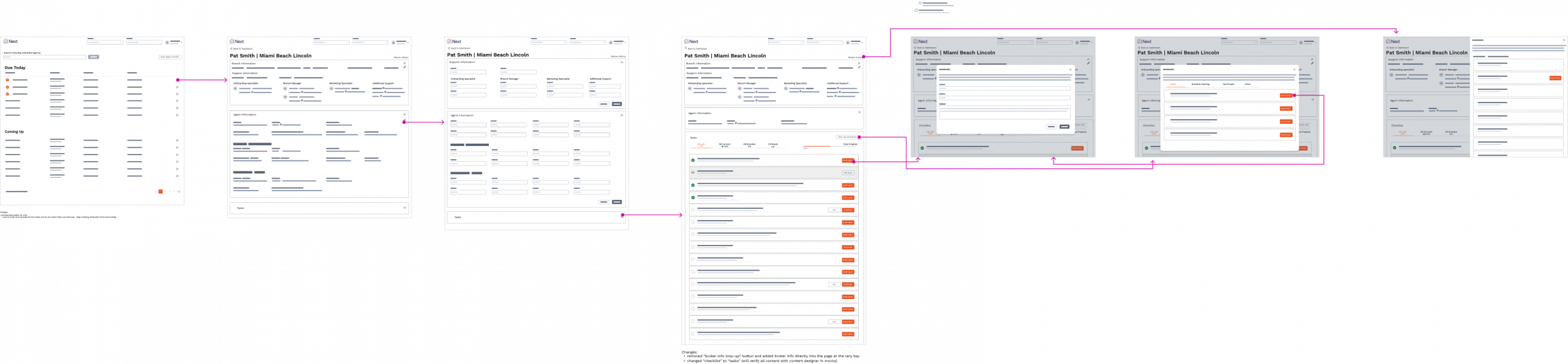
We started with a FigJam whiteboarding session to unpack every touchpoint in the end-to-end onboarding process. Not just the screens — everything. The goal was to see the entire forest, not just the trees.
From there, we:
- Defined an ideal “happy path” workflow.
- Worked backward from the ideal flow to identify what could land in P0, P1, and P2.
- Flagged dependencies on other teams and systems that could trip us up.

I pulled together a horizontal workstream — design, product, and engineering from broker, agent, and AIS — and created a shared roadmap that called out dependencies and checkpoints. Monthly cross-team reviews kept us aligned, clearing blockers and building trust. For a process long defined by silos, this was the first time the pieces were working toward a single vision.

Design in Motion
While PMs broke down user stories, I dove into wireframes with the other design manager. We kept things intentionally low fidelity at first, focusing feedback on flow and functionality.
The mandate: remove as many steps as possible, and automate the rest.
The “before” state was almost comical:
- A broker filled out a long form.
- A Teams message fired into a chat.
- An onboarding specialist manually “claimed” the agent with a custom emoji.
- That person had to log into a SharePoint site that could take minutes just to load.
- Only then could they manually assign the agent to themselves.
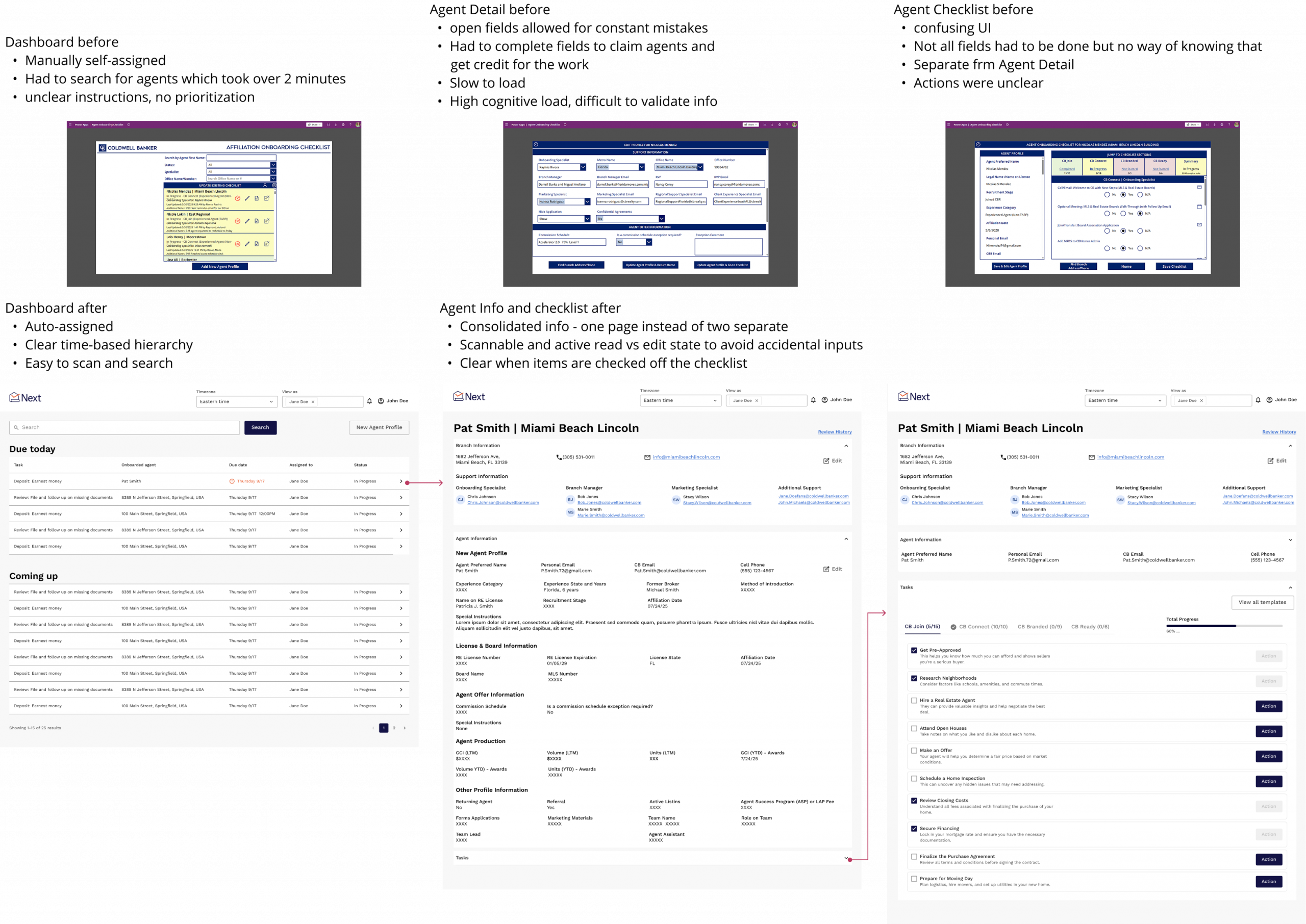
Our “after” state aimed for elegance:
- Broker triggers onboarding in their own tool (Boss).
- Auto-assignment routes the new agent to the right specialist instantly.
- The agent shows up immediately in the onboarding dashboard.
Boss wasn’t ready for P0, so we left the form for now but automated everything downstream. It was a compromise that still slashed friction while laying the groundwork for future releases.
From Wires to Buy-In
We turned wires into mocks at record speed, elevating them through Bespoke to feel crisp and modern. To bring the story to life for leadership, we:
- Built a prototype showing how many steps were eliminated.
- Created a deck mapping AIS and agent flows together for the first time.
For the first time, the business could see how silos were being broken down and how much manual work we were removing.
Leadership and Design Side by Side
As VP of UX, I set the horizontal vision, built alignment across the business, and kept the teams moving forward. As a Principal Designer, I sketched, wired, mocked, and prototyped side by side with the design manager to make sure the vision translated into something real.
That dual role was crucial. Without leadership, the silos would’ve stayed. Without design execution, the vision would’ve remained abstract. Together, we made it tangible.
Where it Stands
The tool is on track to launch in September, with usability testing planned post-release due to research bandwidth constraints.
Even before launch, the impact is clear:
- Silos are broken.
- Broker, agent, and AIS teams are aligned.
- The path to automation is real.
The data will come after launch, but the cultural shift — from siloed, manual chaos to a shared, streamlined vision — is already a win.