
Anywhere UX
Turning silos into systems, confusion into clarity,
and chaos into collaboration.
My role: Vice President, User Experience
The Challenge: Design, but make it unified
When I joined Anywhere, the UX team felt like a family reunion where nobody had met before. With seven iconic brands under one roof (Coldwell Banker, Century 21, Cartus, ERA, Corcoran, Better Homes and Gardens Real Estate, and Sotheby’s International Realty)—and just as many different approaches to design—it was clear we needed a shift. Designers were scattered across teams, processes were fragmented, and no one could quite agree on what “accessible” meant.
There were smart, passionate people everywhere. What they lacked wasn’t talent—it was connection.
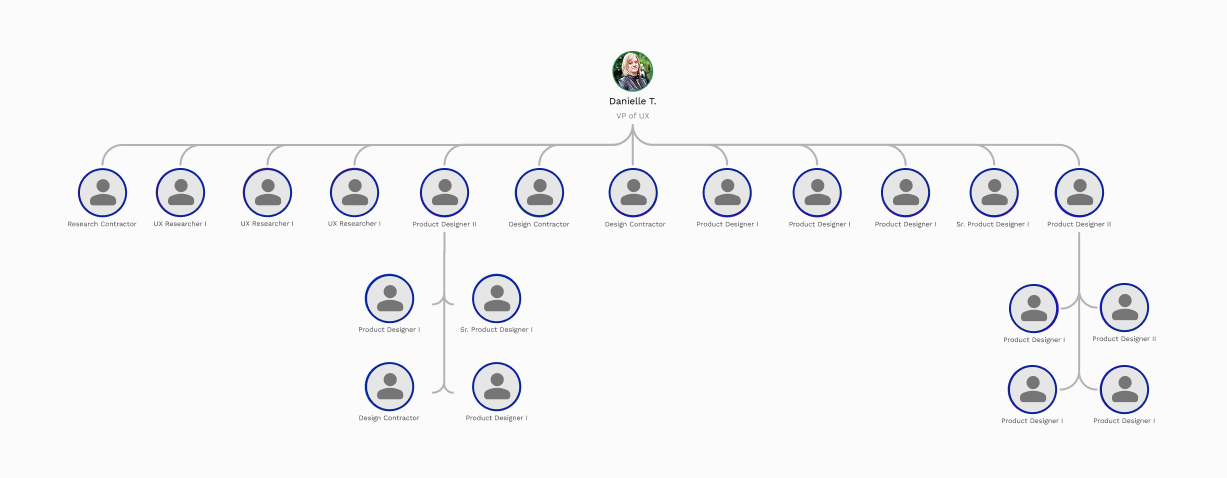
designers & researchers
applications supported
%
collaboration
%
accessibility score
"Design Systems"
The Mission: Connect, Align, Empower
So, I got to work. My goals:
- Align UX across applications without stifling creativity.
- Create systems and processes that work at scale.
- Make it easy to do the right thing—especially for accessibility.
- Grow a team that loves their work and their workplace.
The Build: Foundations First
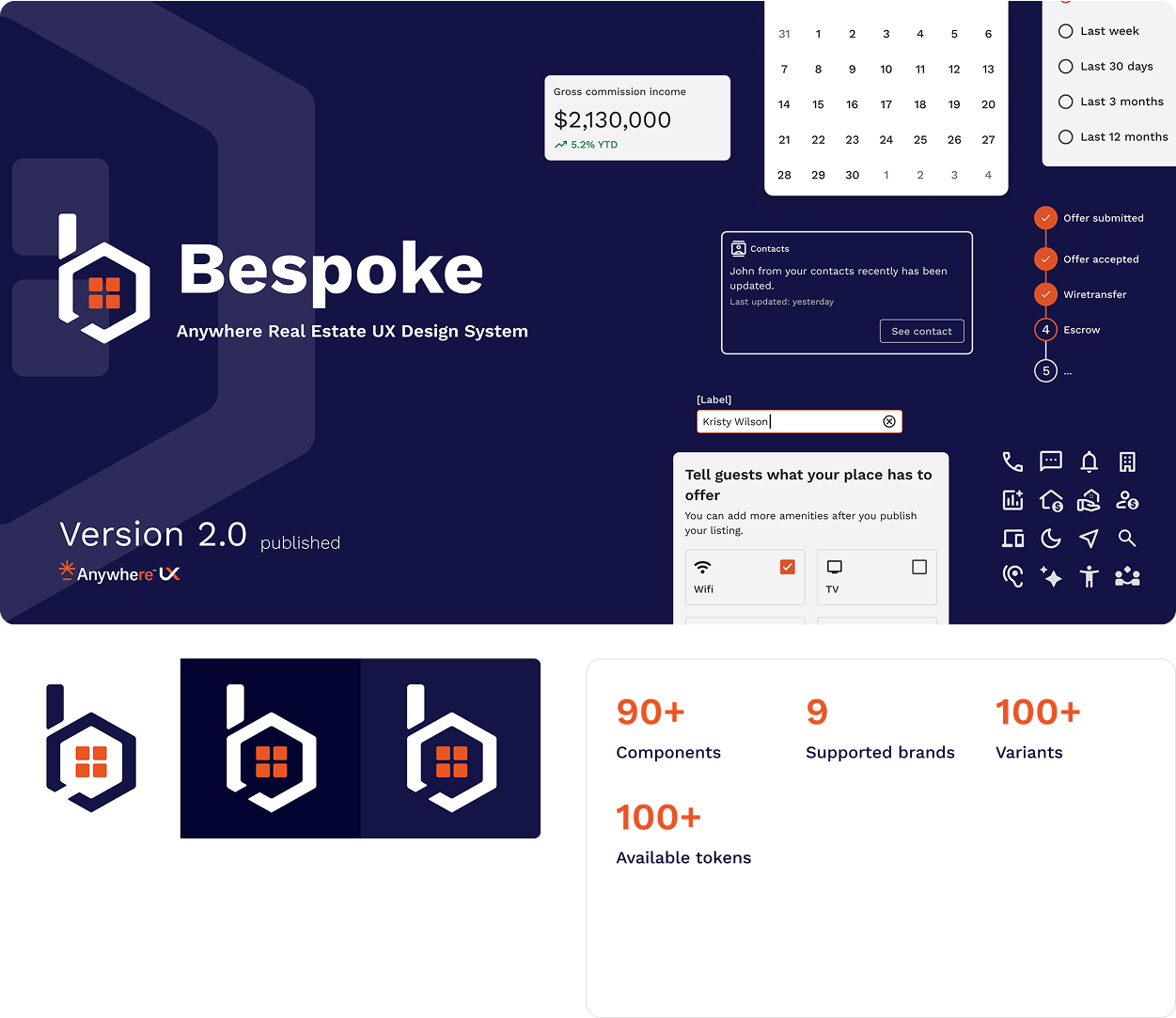
1. Bespoke: The Design System with Style and Substance
We built Bespoke, a design system that served 7+ brands across 6 consolidated applications and 15+ product teams—uniting them around reusable components, thoughtful guidelines, and baked-in accessibility.
This wasn’t just a library of buttons. It was a culture shift. Suddenly, designers and engineers had a shared language—and a faster path to creating polished, inclusive experiences.
2. Accessibility: Beyond the Checkbox
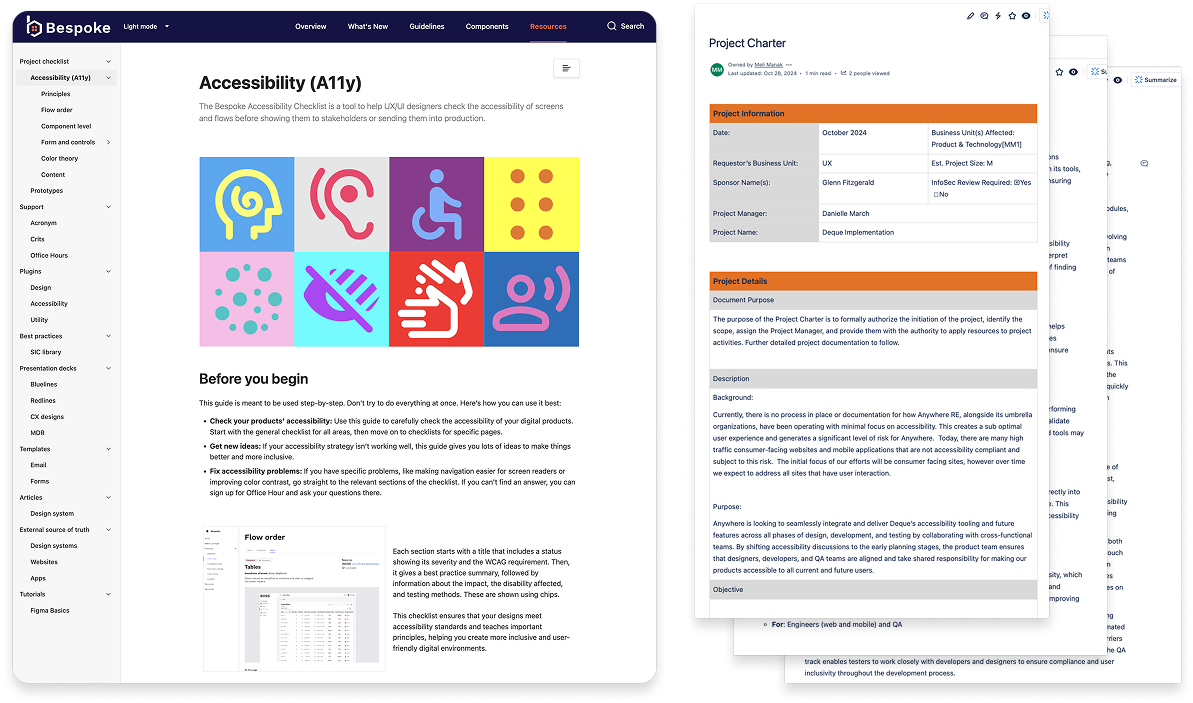
Compliance is table stakes. We aimed higher. I built a passionate accessibility guild and empowered them with tools, training, and executive support. The result? A 95% lift in accessibility scores—and even more importantly, products that actually worked for more people.
3. Growing the Humans
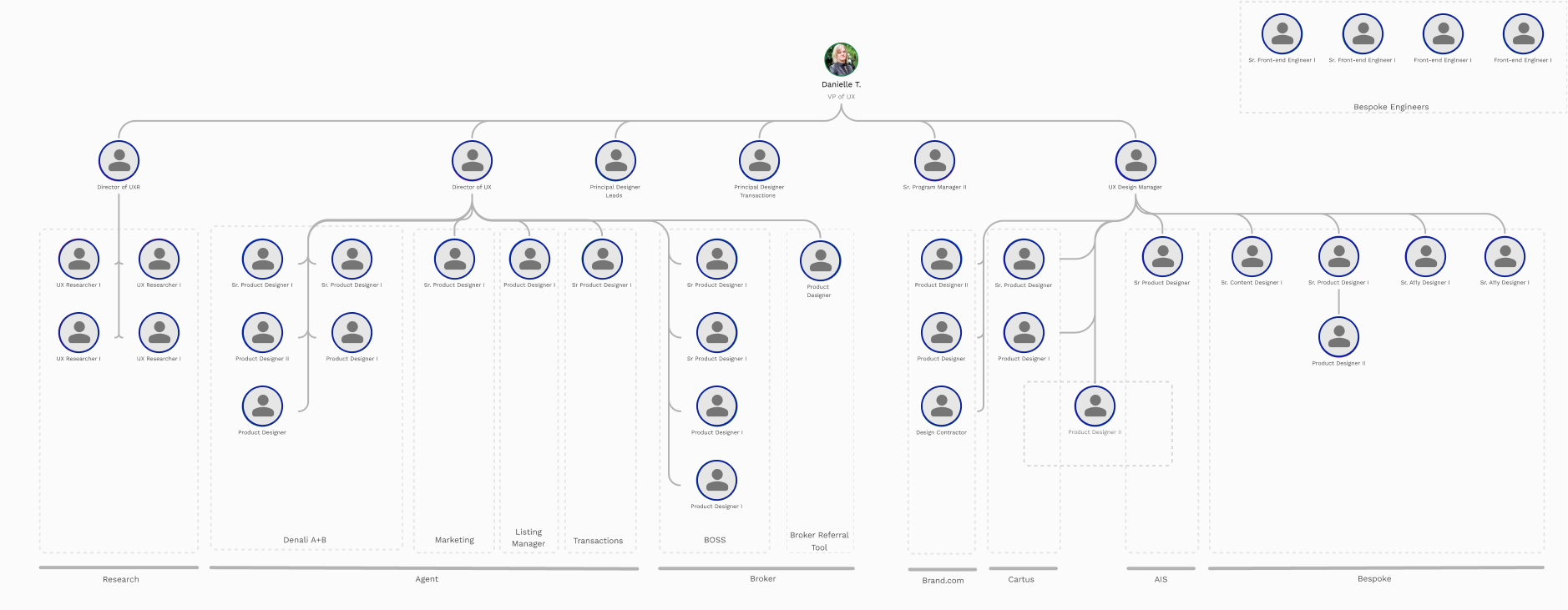
I scaled the team from 20 to 35, focusing not just on headcount but on health. We introduced career ladders, launched a UX playbook, and carved out time for mentorship, learning, and self-reflection. We did unfortunatly have to say good-bye to some team mambers that did not meet the bar or embrace the new collaborative nature of the team in a re-org.
Team morale went up, turnover went down, and designers had a clear path forward—wherever they were in their careers.
4. Process, but Make It Friendly
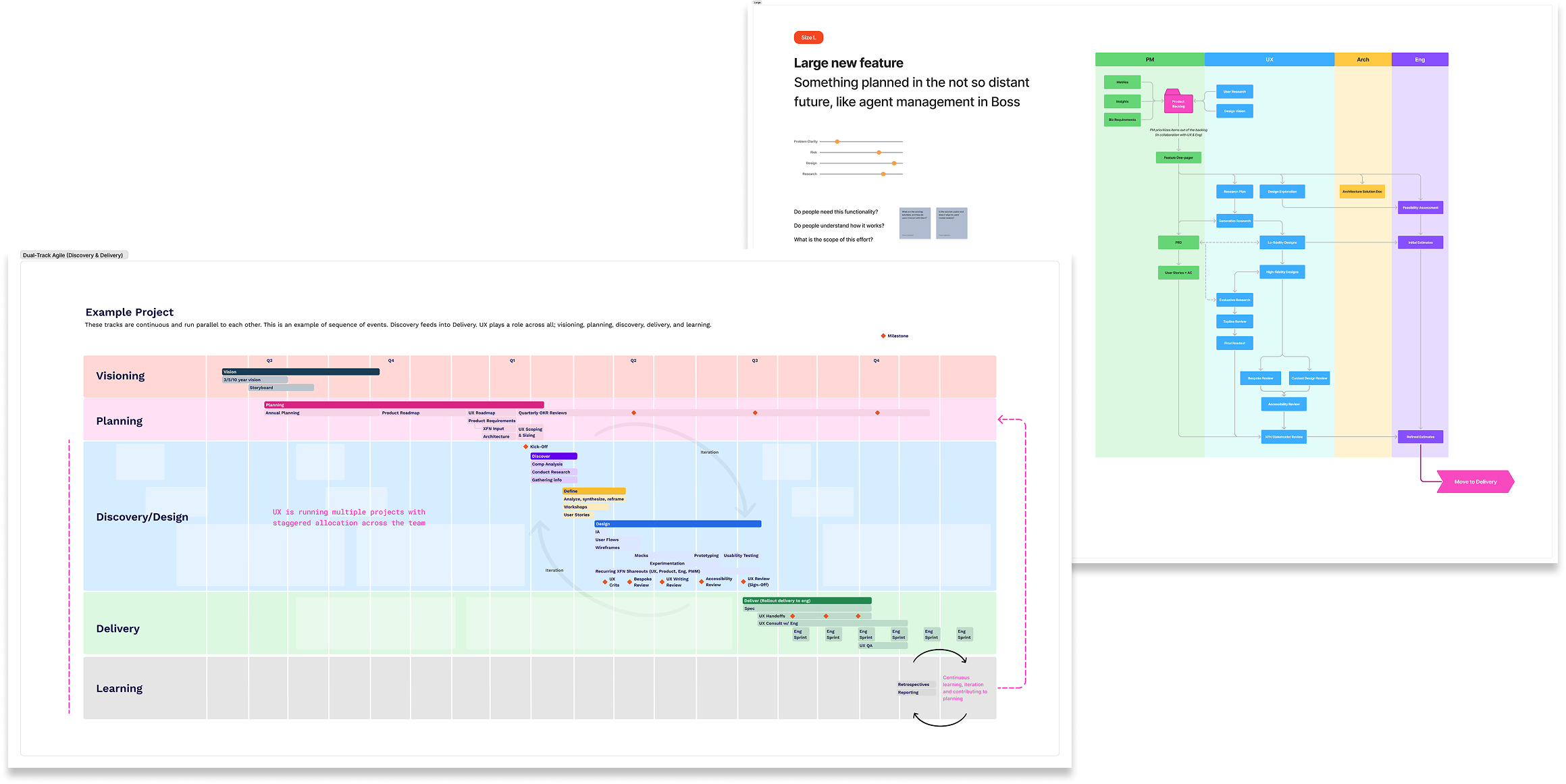
We developed a structured discovery process that made it easy to collaborate across functions. No more guessing who was doing what, or when research was happening, or what even counted as a “final” design.
We also launched a clean, shareable UX roadmap in Asana that helped PMs, engineers, and execs know where we were headed (and why).
The Magic Trick: Transparency
I created a recurring Monthly Design Review to open the curtains on our work—showcasing in-flight design, sharing wins and learnings, and surfacing blockers. It helped us advocate for our work, foster collaboration, and build trust with stakeholders across the company.
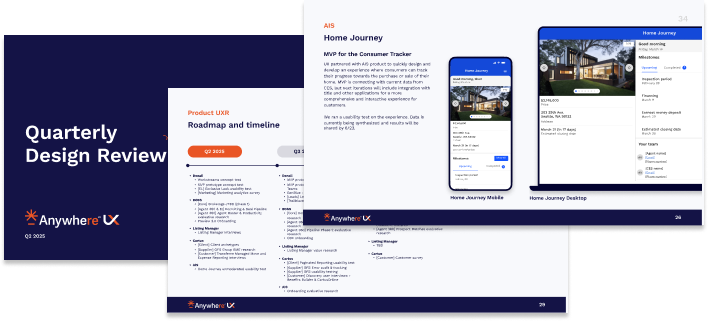
Screenshots from Anywhere UX Quarterly Design Review
The Impact
🚀 Launched Bespoke design system adopted across 15+ product teams
👥 Scaled and stabilized the team, improving retention by 45%
♿️ Raised accessibility scores by 95%
⏱️ Reduced project turnaround times by 20% through process clarity
❤️ Fostered a culture of curiosity, collaboration, and continuous improvement
Final Stats
designers & researchers
consolidated applications
%
collaboration
%
accessibility score
Design System
Reflections
This role has reminded me that design leadership isn’t about enforcing uniformity—it’s about nurturing alignment. It’s about building systems and humans. And when you do it right, the work gets better, faster, and more inclusive… and people actually enjoy doing it.